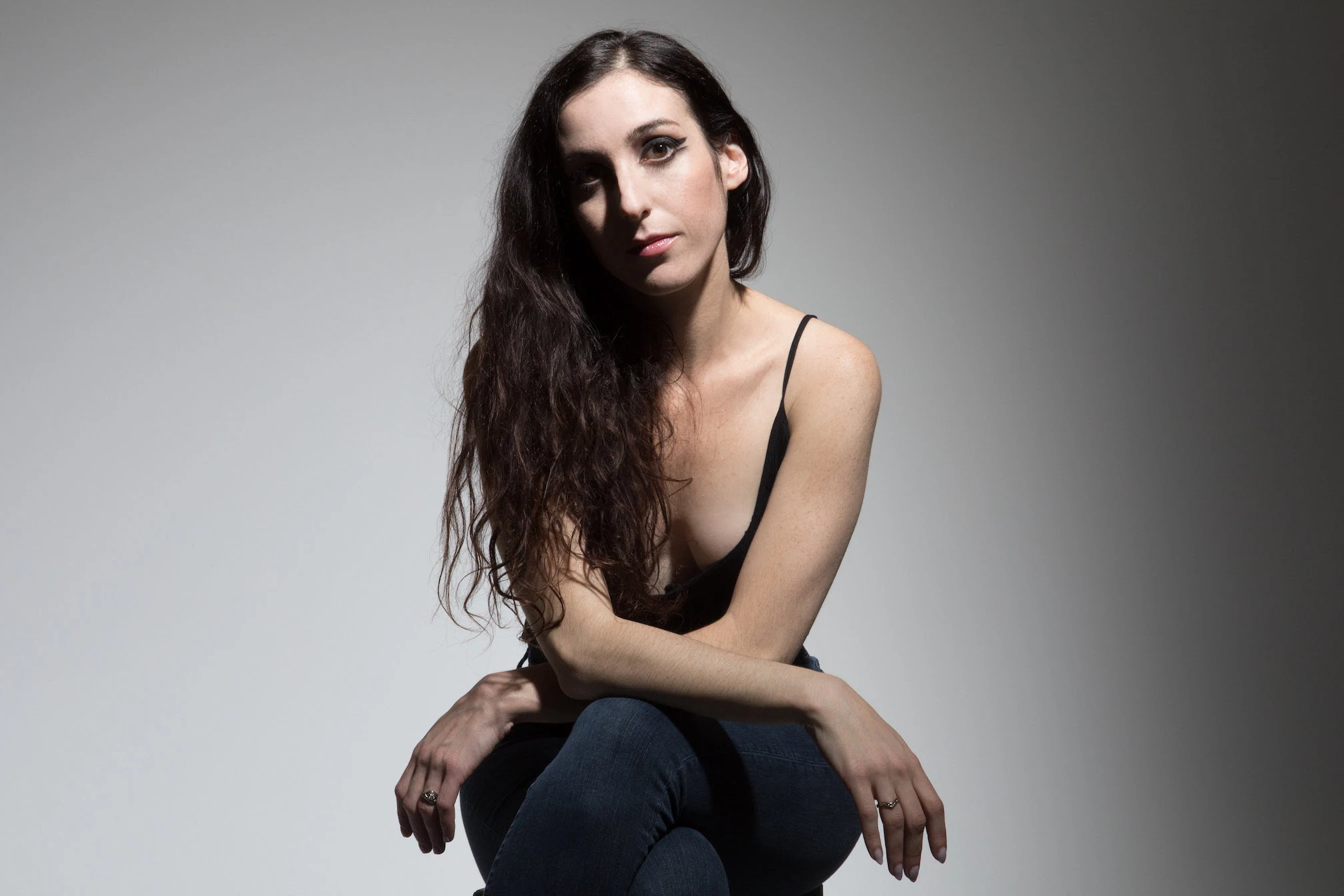
The Antlers, originally a solo act moniker for creator, Peter Siberling is now a trio of multi-talented most down to earth guys, breathing a celebratory life into subject matter that on paper seemed very dreary and sorrowful. I had the pleasure to meet the guys when they came through Chicago for the Pitchfork Music Festival. Hot on the official release of their album, Hospice, I will reunite with them at Red Rocks for the Monolith Festival. Lucky for me, then once more on The Antlers' first official tour next week when they return to Chicago. In all this time, I have been able to coordinate with the three via email an interview in hopes to get to know the guys better and unveil some of the thoughts behind Hospice, easily one of my top 5 albums of the year.
Drawing From Music: In the past when you toured did you have instrumentalists accompanying you? Now with the addition of Michael Lerner and Darby Cicci, will the creative processes change with future albums, or will this be a ship that you will continue to primarily steer?
Peter Siberling: We actually never toured until we were a three piece. When I was starting out, I played shows by myself for about a year and a half, but that was a long time ago, playing very, very different songs. The creative process seems to be changing every day, and I think it’s safe to say that all of us playing and touring together is moving things in a much more collaborative direction.
DFM: What I have been drawn to with your music is how it has always felt like it was a journey to an alter reality. How is it you hope for your listeners to interpret your music? Is there a certain emotion or personal idea that you hope will resonate with them?
PS: That’s a pretty ideal reaction. My favorite music is the kind that takes me out of reality, where I don’t hear people in a studio, but music that brings you into some sonic universe that’s not your own. But that’s not just a sound and atmosphere thing. I think lyrics can work with that to create some new world within the span of 4 minutes or 50 minutes or 5 hours. I think the point of Hospice is some sort of interconnectivity, being brought into someone’s very specific set of experiences, into their head and their world and somehow feel as though it’s your own.
DFM: I think as an artist myself; my aim has always been to keep a narrative quality in my paintings. I read this was a characteristic you enjoy to retain in your music. Can you tell me a little about your writing process? How do you decide what your albums’ focus is going to be on?
PS: So far, every album’s been the result of obsession over some idea or story or set of stories. Once that obsession starts, the idea for the album as a whole arrives, then the songs and sound are sort of built around that overriding plan. That idea comes from different places- sometimes it’s out of nowhere, other times it’s pulled out of personal experience. Hospice was the latter.
DFM: Were there real life situations that brought you to this introspective investigation of the institution of a hospice? How autobiographical are some the situations experienced in the album?
PS: It’s creative memoir. I won’t go into what’s autobiographical and what’s pulled from other ideas, but Hospice has been the equivalent of telling thousands of people too much about yourself and repeatedly stopping mid-sentence. It’s been a weird thing to wrap my head around.
DFM: What is the importance of Sylvia Plath to Hospice? Was she part of the initial obsessions for this album? How is it you relate with her as an artist?
PS: Sylvia in Hospice is sort of a composite of several Sylvias- a few fictional and a few non-fictional. Her story and personality definitely played a major role in the writing of this album, but only insofar as I found a whole mess of parallels between her and someone I knew personally. I wouldn't say I relate to her myself, but in a way I sometimes feel as though I knew her.
DFM: Michael and Darby If one were to run a background check on you what would they learn?
Michael Lerner: As a young man, my hair was longer than Darby's
Darby Cicci: They would probably find a lot of old theater photos. I used to be an actor for a long time and I’ve been in a ton of plays. You also might find a record I made called “Minus Green”. If you’re lucky maybe even “Darby’s Iguana Page”, from the early days of the internet.
DFM: Do you let current news related issues affect your creative/writing processes with your music?
PS: I tend to keep up with what’s going on pretty well, with the exception of when we’re touring and we’re in dreamland. But I tend to avoid putting politics and current events into songs...I don’t yet know how to write a political song without being uninformed and obnoxious.
ML: I think that outside forces in the world inevitably shape one's mindset –usually subconsciously. But no, the news doesn't really come into play for me. In fact, I actually try and keep clear of the news for the most part these days and focus on more positive things.
DC: News and issues and everything definitely affects our lives. Writing is really just a response to how we deal with our lives in a weird way so pretty much everything influences us creatively.
DFM:What are your roots as musicians? How did it come to be that The Antlers exists? Who were some oft the musical influences that aided in the molding of the musicians you are today?
PS: I grew up playing guitar, borrowing my dad’s amps and pedals, learning to play from him and eventually another teacher. I’d played in a band for much of my growing up- we set up a practice and recording space in a barn and spent all summer every summer there, writing songs and swinging pillows at bats that threatened to interrupt. That band dissolved toward the end of high school (we’d been playing together since the age of eleven) and I don’t think any of us knew what to do with ourselves when it was finished. Not long after, I started recording by myself for the first time. From then on, I recorded albums and EPs constantly until the end of recording Hospice, when I took a break. This recording project became The Antlers when I moved to NYC in 2006, and became a band some time between 2007 and the end of 2008.
ML: I've been playing drums since I was six years old and have played in a lotof bands. I met Peter when he decided to branch out from a solo act to a full band. I was looking for a new band at the time. When I first heard him sing,
I knew that I wanted to work with him. One of my biggest influences was ateacher of mine named Yusef Lateef. He helped me understand the importance of musical dialogue and interplay with other musicians. Buddy Rich, Tony Williams and Elvin Jones were also huge drumming influences for me.
DC: I grew up playing trumpet and playing a lot of jazz. Then a lot of blues, then I quit playing music for awhile and then got into writing songs, and then got really obsessed with music and started playing everything. Then I got into electronic music and became obsessed with synthesizers, electronics, and building and repairing equipment. I met Peter right before the electronics obsession and played trumpet and bowed banjo for a long time when we made Hospice. We all listen to a bunch of things...a lot of indie rock, but almost more than that, a lot of sort of epic post-rock, electronic music, dub, soul, jazz, folk, etc etc etc.
DFM: The layers and styles that are emitted in your music seem endless. Who were some of your biggest influences at an early age and how have they changed through the years?
PS: I was raised on The Beatles & Hendrix, and when I was very young found a lot of terrible music to listen to on my own. But I was really into Nirvana and Smashing Pumpkins as well. Getting into Radiohead and indie rock when I was in my early teens changed things for sure, then getting into trip hop and more emotionally raw indie rock in my late teens and early 20s put things on a slightly different path.
ML: When I was younger, rock bands like Led Zeppelin were a big part of my formative years musically. When I was in college I got into jazz which changed my approach to drumming. I began to explore more subtle nuances in my playing and I began to try and approach my instrument with an ear towards its musicality and not just as a rhythmic component. When I was younger, rock bands like Led Zeppelin were a big part of myformative years musically. When I was in college I got into jazz which changed my approach to drumming. I began to explore more subtle nuances in my playing and I began to try and approach my instrument with an ear towards its musicality and not just as a rhythmic component.
DC: Elliott Smith, Howlin Wolf, John Vanderslice, and Jonny Greenwood. Now’s is Moderat and a bunch of electronic music, dub, noise, and about ten thousand other records.
DFM: I’m not sure if this seems repetitive but what would you say is the constant idea or themes you try to address in your music?
PS: Depends on the song or the album, really. Hospice is about something different than the EPs that precede it (New York Hospitals is along the same lines, but nothing beforehand is). If there’s any common thread in all things Antlers, it’s probably some sort of understanding about being alive.
ML: I am interested in playing with intensity regardless of the dynamics. I am also trying to balance precision with a certain quality of looseness. Overall, providing a song with the right feel is very important to me.
DC: No not really. I think if you start with an idea, the piece of music or song or whatever will always be better as just an idea. It’s better to just write instinctively and then streamline or sound design it later.
DFM: How much do you think being signed to a label will change the future albums from the Antlers? Do you think part of the fun is the DIY aspect of the process or will the added facility allow more room for creative experimentation?
PS: It’s really nice to finally be handing over responsibility to other people. We were doing absolutely everything ourselves for a long time, and it was completely worthwhile, but now we’re touring a lot and are happy to have people helping in such a major way. Now we get a chance to really focus on making music, which is ultimately the most important thing in all of this. I think being with Frenchkiss is going to give us the breathing room we need to make our next record.
DFM: It may be a question you have answered a lot but I’m not sure I’ve ever read it anywhere, but how did you come up with the name The Antlers?
PS:It’s a mystery! To myself, even.
DFM: Are there any new bands or music that you’re listening to? Any bands you are looking forward to see in your upcoming shows?
PS: I think everyone ought to hear Son Lux’s record. It came out last year, I believe, but it’s new to me and incredible. I’m really looking forward to seeing Flaming Lips at Pitchfork. I haven’t seen them since 2003, and that was possibly the best show I’ve ever seen.
ML: The records I've been listening to the most lately far and away are Grizzly Bear's Veckatimest & Dirty Projectors's Bitte Orca. Both albums have gotten a ridiculous amount of plays on my ipod. Off the top of my head, for upcoming shows , I am looking forward to seeing The Books, Phoenix, Ida Maria and Cymbals Eat Guitars.
DC: The new Broadcast, Flaming Lips and Fuck Buttons records are all pretty sick. Interested in seeing Sleepy Sun and also Wild Beasts. And we’re touring with Minus the Bear and Twin Tigers so pretty excited to see them.
DFM: If there were any character in history from any media (TV, literature, comics, etal.) that you would best liken yourself to who would it be? Why?
PS: Maybe Kevin Arnold from The Wonder Years. I don’t necessarily know how similar we are, but I just think he’s a really interesting character. I noticed recently that he barely says anything unless his older self is narrating, but his facial expressions speak louder than anything else.
ML: Jay Gatsby. A long time ago, my friends Johanna and Nora gave me that nick-name. I think it had something to do with the way I act at social gatherings.
DC: My personal idol is Thomas Edison. I’m nothing like him though.
DFM: And finally, aside from music what would you say are some personal outlets for you?
PS: Lately I’ve been writing stories. I guess it’s not all that different from writing songs - still semi-autobiographical, but it doesn’t feel self-referential. I go in and out of phases with photography...right now I’m working on getting back into it.
ML: Surfing & Kayaking
DC: Art, graphic design, fixing broken equipment, good beer, cooking southern food. And I really like fishing when I’m home in Alabama.
Drawing From Music: In the past when you toured did you have instrumentalists accompanying you? Now with the addition of Michael Lerner and Darby Cicci, will the creative processes change with future albums, or will this be a ship that you will continue to primarily steer?
Peter Siberling: We actually never toured until we were a three piece. When I was starting out, I played shows by myself for about a year and a half, but that was a long time ago, playing very, very different songs. The creative process seems to be changing every day, and I think it’s safe to say that all of us playing and touring together is moving things in a much more collaborative direction.
DFM: What I have been drawn to with your music is how it has always felt like it was a journey to an alter reality. How is it you hope for your listeners to interpret your music? Is there a certain emotion or personal idea that you hope will resonate with them?
PS: That’s a pretty ideal reaction. My favorite music is the kind that takes me out of reality, where I don’t hear people in a studio, but music that brings you into some sonic universe that’s not your own. But that’s not just a sound and atmosphere thing. I think lyrics can work with that to create some new world within the span of 4 minutes or 50 minutes or 5 hours. I think the point of Hospice is some sort of interconnectivity, being brought into someone’s very specific set of experiences, into their head and their world and somehow feel as though it’s your own.
DFM: I think as an artist myself; my aim has always been to keep a narrative quality in my paintings. I read this was a characteristic you enjoy to retain in your music. Can you tell me a little about your writing process? How do you decide what your albums’ focus is going to be on?
PS: So far, every album’s been the result of obsession over some idea or story or set of stories. Once that obsession starts, the idea for the album as a whole arrives, then the songs and sound are sort of built around that overriding plan. That idea comes from different places- sometimes it’s out of nowhere, other times it’s pulled out of personal experience. Hospice was the latter.
DFM: Were there real life situations that brought you to this introspective investigation of the institution of a hospice? How autobiographical are some the situations experienced in the album?
PS: It’s creative memoir. I won’t go into what’s autobiographical and what’s pulled from other ideas, but Hospice has been the equivalent of telling thousands of people too much about yourself and repeatedly stopping mid-sentence. It’s been a weird thing to wrap my head around.
DFM: What is the importance of Sylvia Plath to Hospice? Was she part of the initial obsessions for this album? How is it you relate with her as an artist?
PS: Sylvia in Hospice is sort of a composite of several Sylvias- a few fictional and a few non-fictional. Her story and personality definitely played a major role in the writing of this album, but only insofar as I found a whole mess of parallels between her and someone I knew personally. I wouldn't say I relate to her myself, but in a way I sometimes feel as though I knew her.
DFM: Michael and Darby If one were to run a background check on you what would they learn?
Michael Lerner: As a young man, my hair was longer than Darby's
Darby Cicci: They would probably find a lot of old theater photos. I used to be an actor for a long time and I’ve been in a ton of plays. You also might find a record I made called “Minus Green”. If you’re lucky maybe even “Darby’s Iguana Page”, from the early days of the internet.
DFM: Do you let current news related issues affect your creative/writing processes with your music?
PS: I tend to keep up with what’s going on pretty well, with the exception of when we’re touring and we’re in dreamland. But I tend to avoid putting politics and current events into songs...I don’t yet know how to write a political song without being uninformed and obnoxious.
ML: I think that outside forces in the world inevitably shape one's mindset –usually subconsciously. But no, the news doesn't really come into play for me. In fact, I actually try and keep clear of the news for the most part these days and focus on more positive things.
DC: News and issues and everything definitely affects our lives. Writing is really just a response to how we deal with our lives in a weird way so pretty much everything influences us creatively.
DFM:What are your roots as musicians? How did it come to be that The Antlers exists? Who were some oft the musical influences that aided in the molding of the musicians you are today?
PS: I grew up playing guitar, borrowing my dad’s amps and pedals, learning to play from him and eventually another teacher. I’d played in a band for much of my growing up- we set up a practice and recording space in a barn and spent all summer every summer there, writing songs and swinging pillows at bats that threatened to interrupt. That band dissolved toward the end of high school (we’d been playing together since the age of eleven) and I don’t think any of us knew what to do with ourselves when it was finished. Not long after, I started recording by myself for the first time. From then on, I recorded albums and EPs constantly until the end of recording Hospice, when I took a break. This recording project became The Antlers when I moved to NYC in 2006, and became a band some time between 2007 and the end of 2008.
ML: I've been playing drums since I was six years old and have played in a lotof bands. I met Peter when he decided to branch out from a solo act to a full band. I was looking for a new band at the time. When I first heard him sing,
I knew that I wanted to work with him. One of my biggest influences was ateacher of mine named Yusef Lateef. He helped me understand the importance of musical dialogue and interplay with other musicians. Buddy Rich, Tony Williams and Elvin Jones were also huge drumming influences for me.
DC: I grew up playing trumpet and playing a lot of jazz. Then a lot of blues, then I quit playing music for awhile and then got into writing songs, and then got really obsessed with music and started playing everything. Then I got into electronic music and became obsessed with synthesizers, electronics, and building and repairing equipment. I met Peter right before the electronics obsession and played trumpet and bowed banjo for a long time when we made Hospice. We all listen to a bunch of things...a lot of indie rock, but almost more than that, a lot of sort of epic post-rock, electronic music, dub, soul, jazz, folk, etc etc etc.
DFM: The layers and styles that are emitted in your music seem endless. Who were some of your biggest influences at an early age and how have they changed through the years?
PS: I was raised on The Beatles & Hendrix, and when I was very young found a lot of terrible music to listen to on my own. But I was really into Nirvana and Smashing Pumpkins as well. Getting into Radiohead and indie rock when I was in my early teens changed things for sure, then getting into trip hop and more emotionally raw indie rock in my late teens and early 20s put things on a slightly different path.
ML: When I was younger, rock bands like Led Zeppelin were a big part of my formative years musically. When I was in college I got into jazz which changed my approach to drumming. I began to explore more subtle nuances in my playing and I began to try and approach my instrument with an ear towards its musicality and not just as a rhythmic component. When I was younger, rock bands like Led Zeppelin were a big part of myformative years musically. When I was in college I got into jazz which changed my approach to drumming. I began to explore more subtle nuances in my playing and I began to try and approach my instrument with an ear towards its musicality and not just as a rhythmic component.
DC: Elliott Smith, Howlin Wolf, John Vanderslice, and Jonny Greenwood. Now’s is Moderat and a bunch of electronic music, dub, noise, and about ten thousand other records.
DFM: I’m not sure if this seems repetitive but what would you say is the constant idea or themes you try to address in your music?
PS: Depends on the song or the album, really. Hospice is about something different than the EPs that precede it (New York Hospitals is along the same lines, but nothing beforehand is). If there’s any common thread in all things Antlers, it’s probably some sort of understanding about being alive.
ML: I am interested in playing with intensity regardless of the dynamics. I am also trying to balance precision with a certain quality of looseness. Overall, providing a song with the right feel is very important to me.
DC: No not really. I think if you start with an idea, the piece of music or song or whatever will always be better as just an idea. It’s better to just write instinctively and then streamline or sound design it later.
DFM: How much do you think being signed to a label will change the future albums from the Antlers? Do you think part of the fun is the DIY aspect of the process or will the added facility allow more room for creative experimentation?
PS: It’s really nice to finally be handing over responsibility to other people. We were doing absolutely everything ourselves for a long time, and it was completely worthwhile, but now we’re touring a lot and are happy to have people helping in such a major way. Now we get a chance to really focus on making music, which is ultimately the most important thing in all of this. I think being with Frenchkiss is going to give us the breathing room we need to make our next record.
DFM: It may be a question you have answered a lot but I’m not sure I’ve ever read it anywhere, but how did you come up with the name The Antlers?
PS:It’s a mystery! To myself, even.
DFM: Are there any new bands or music that you’re listening to? Any bands you are looking forward to see in your upcoming shows?
PS: I think everyone ought to hear Son Lux’s record. It came out last year, I believe, but it’s new to me and incredible. I’m really looking forward to seeing Flaming Lips at Pitchfork. I haven’t seen them since 2003, and that was possibly the best show I’ve ever seen.
ML: The records I've been listening to the most lately far and away are Grizzly Bear's Veckatimest & Dirty Projectors's Bitte Orca. Both albums have gotten a ridiculous amount of plays on my ipod. Off the top of my head, for upcoming shows , I am looking forward to seeing The Books, Phoenix, Ida Maria and Cymbals Eat Guitars.
DC: The new Broadcast, Flaming Lips and Fuck Buttons records are all pretty sick. Interested in seeing Sleepy Sun and also Wild Beasts. And we’re touring with Minus the Bear and Twin Tigers so pretty excited to see them.
DFM: If there were any character in history from any media (TV, literature, comics, etal.) that you would best liken yourself to who would it be? Why?
PS: Maybe Kevin Arnold from The Wonder Years. I don’t necessarily know how similar we are, but I just think he’s a really interesting character. I noticed recently that he barely says anything unless his older self is narrating, but his facial expressions speak louder than anything else.
ML: Jay Gatsby. A long time ago, my friends Johanna and Nora gave me that nick-name. I think it had something to do with the way I act at social gatherings.
DC: My personal idol is Thomas Edison. I’m nothing like him though.
DFM: And finally, aside from music what would you say are some personal outlets for you?
PS: Lately I’ve been writing stories. I guess it’s not all that different from writing songs - still semi-autobiographical, but it doesn’t feel self-referential. I go in and out of phases with photography...right now I’m working on getting back into it.
ML: Surfing & Kayaking
DC: Art, graphic design, fixing broken equipment, good beer, cooking southern food. And I really like fishing when I’m home in Alabama.


 Subscribe